
Skip to content
silent torque Charge calculator

independent owner's guide · united kingdom

Living with an electric BMW, worked out in pence and miles.

Silent Torque is an independent guide for UK drivers of the i4, i5, i7, iX, iX1, iX2 and the new-generation iX3. We stick to the parts that decide whether ownership feels easy: where you plug in, what a charge really costs, why rapid stops end at 80%, and what a cold January morning does to your range.

Ten to eighty per cent: the window in which rapid chargers do their quickest work.

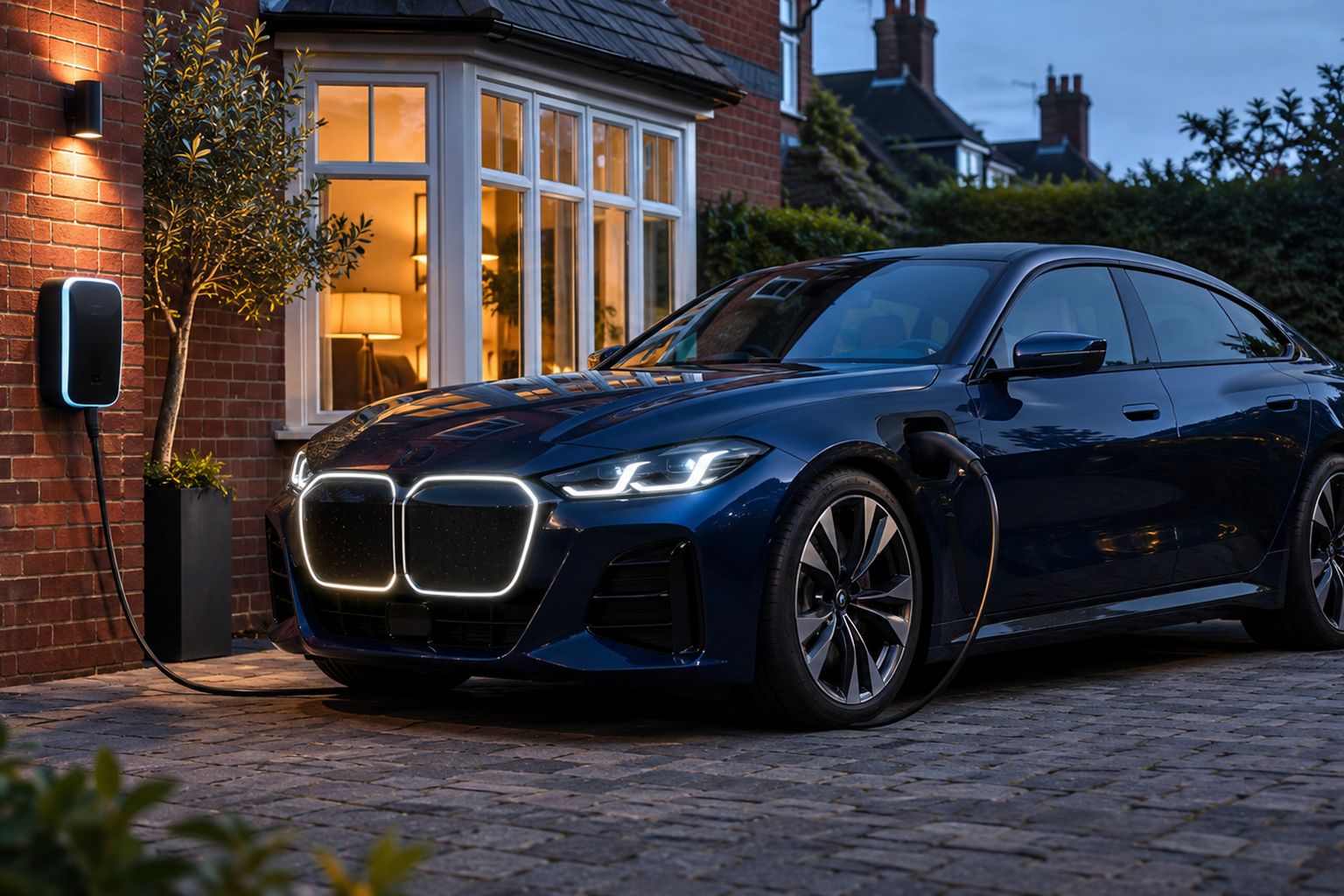
A dark blue electric four-door coupé plugged into a wall-mounted charger on the driveway of a red-brick British house at dusk.
Plugged in overnight at home: for most owners, the cheapest miles start here.
rapid charging 10–80% Why the quickest stop is rarely a full one, and when it is worth staying past 80. See the curve home vs rapid AC/DC Your driveway and a motorway charger can price the same kilowatt-hour very differently. Put your own tariff in and compare. Open the calculator winter range mi/kWh Judge cold-weather range by efficiency, not by the dashboard's estimate. Here is how to measure it properly. Read the winter note

the line-up

Seven electric BMWs, sorted by the life they suit.

We don't print range, battery or price figures: they change with model years, wheel sizes and option packs, and a stale number is worse than none. Use these notes to build a shortlist, then check the official current figures with BMW UK or a retailer for the exact version you are considering.

Scroll sideways or use the arrows. The size scale compares the cars with each other, not with the wider market.

  • Gran Coupé · fastback with a tailgate

    i4

    Size: mid-size

    The most conventional-feeling car in the range: a low seating position, a saloon-like profile and a large tailgate that opens up the whole boot. A natural step for anyone leaving a petrol or diesel 3 or 4 Series.

    suits
    Commuters and motorway drivers who like a low, car-like driving position; couples and small families.
    check first
    Rear headroom for tall passengers under the sloping roof, and the wheel size: it affects ride, tyre bills and efficiency.
  • Executive saloon · Touring estate

    i5

    Size: large

    A full-size executive car built for distance, sold as a saloon and as the i5 Touring estate. Quiet at motorway speeds and roomy in the back; the Touring adds the square, practical load space the saloon lacks.

    suits
    High-mileage drivers, company-car users and anyone who regularly drives the length of the country.
    check first
    Saloon or Touring for your luggage, and how a long car fits your garage, driveway and usual car parks.
  • Luxury saloon · the flagship

    i7

    Size: flagship

    A large, exceptionally quiet luxury saloon designed as much around the rear seats as the driver's. It is the electric BMW for being driven as well as for driving.

    suits
    Chauffeur work, executives who work on the move, and drivers who value refinement over agility.
    check first
    Length and width against your garage and regular car parks, and where a home charging cable will comfortably reach.
  • Large SUV · electric from the start

    iX

    Size: large

    A large five-seat SUV designed from the outset as an electric car, with an airy cabin, a high driving position and the kind of hush that suits long family trips.

    suits
    Families who want space and comfort, and drivers covering long rural or motorway miles.
    check first
    Replacement tyre costs on the larger wheel options, and remember it is a five-seater: there is no third row.
  • Compact SUV

    iX1

    Size: compact

    The smallest and most manoeuvrable electric BMW: a compact SUV with a raised seat and a practical boot. It shares its body with the petrol and hybrid X1, so it feels familiar inside.

    suits
    Town and suburban drivers, small families, and anyone who parks on tight terraced streets.
    check first
    That its range and rapid-charging pace suit your longest regular journey; compare official figures with the bigger models.
  • Coupé-styled compact SUV

    iX2

    Size: compact

    The iX1's more expressive sibling, with a sloping roofline and a sportier stance. Underneath, the two are closely related, so the differences are mostly about shape and space.

    suits
    Solo drivers and couples who want a compact SUV with more visual character.
    check first
    Rear headroom and the boot opening against an iX1: the roofline takes a little of each.
  • Mid-size SUV

    new generation

    iX3

    Size: mid-size

    The first production model of BMW's "Neue Klasse" generation: a mid-size SUV on a new electric platform, with new software and a new interior layout. The one to look at if you want the latest technology.

    suits
    Families wanting a mid-size SUV, and early adopters comfortable with an all-new design.
    check first
    Which iX3 you are looking at. The earlier iX3 sold in the UK from 2021 is a different, older car, which matters on the used market.
The minimalist interior of an electric car, with a wide curved display spanning the dashboard behind the steering wheel.

choosing between them

Start with where you charge, then with what you carry.

Two people choosing the same model can have very different experiences. A driver with a driveway and an off-peak tariff will barely think about charging; someone relying on public posts will think about it every week. Settle that first, using the calculator and the five-question check below.

Then shortlist by body and size. Sit in the back, fold the seats, open the tailgate in a tight space and, if you can, drive on the wheel size you would actually buy. Finally, compare the official current range and charging figures for the exact versions you are left with.

charge cost calculator

What does a charge actually cost?

Put in your own battery, tariff and efficiency. Every starting value below is an example to show how the sums work, not a figure for any particular car, supplier or charging network.

Battery

Use the usable (net) figure from your handbook or the official specification, not the gross figure.

Example sizes (not specific models):
State of charge
20%
80%
Price per kWh

Example — enter your own tariff. Each tab remembers the price you type, so you can compare all three. Your bill or the charger's screen shows the current rate.

Efficiency and losses

Example. Use the long-term average from your trip computer; use a lower figure for winter.

Example. Energy lost as heat between the meter and the battery; it varies by charger and temperature. Enter 0 to ignore.

How it works: energy added = usable capacity × (to% − from%). We add your losses to estimate what the meter records, multiply by your price, and use your mi/kWh to estimate miles. Results are estimates; temperature, speed and the charger itself all move the real figure.

your charge

20% → 80%

Grey cells: already in the battery. Mint cells: added by this charge.

cost of this charge
£3.73
energy added, kWh
42.0
approx. miles added
139
pence per mile
2.7

Same charge at your other prices: home standard (26.0p) £12.13 · public rapid (79.0p) £36.87.

An estimate for planning, not a quote. Public chargers may add connection, idle or overstay fees; check the price on the charger or app before you plug in.

why 10–80%

Charging slows as the battery fills. Plan your stops around it.

On a rapid charger, a battery accepts power fastest when it is fairly empty and progressively less as it fills, to protect the cells. That is why manufacturers quote 10–80% charging times, and why stopping at 80% usually gets you back on the road sooner.

The shape of a rapid charge

Illustrative, not a specific model
Illustrative rapid-charging power curve Charging power plotted against state of charge from 0 to 100 per cent. Power climbs quickly, stays high and fairly flat from about 10 to 50 per cent, tapers between 50 and 80 per cent, then falls steeply towards 100 per cent. The 10 to 80 per cent band is highlighted. Illustrative only, not data for any specific model. 10–80%: the fast window fast and fairly flat taper begins slow finish 0% 20% 40% 60% 80% 100% state of charge charging power
The shape, not the numbers: every model, battery temperature and charger produces its own curve. No power figures are shown on purpose.
  • Up to about 50%: power is high and fairly flat.
  • Between about 50% and 80%: power starts to taper.
  • Above 80%: power falls steeply, so miles arrive slowly.
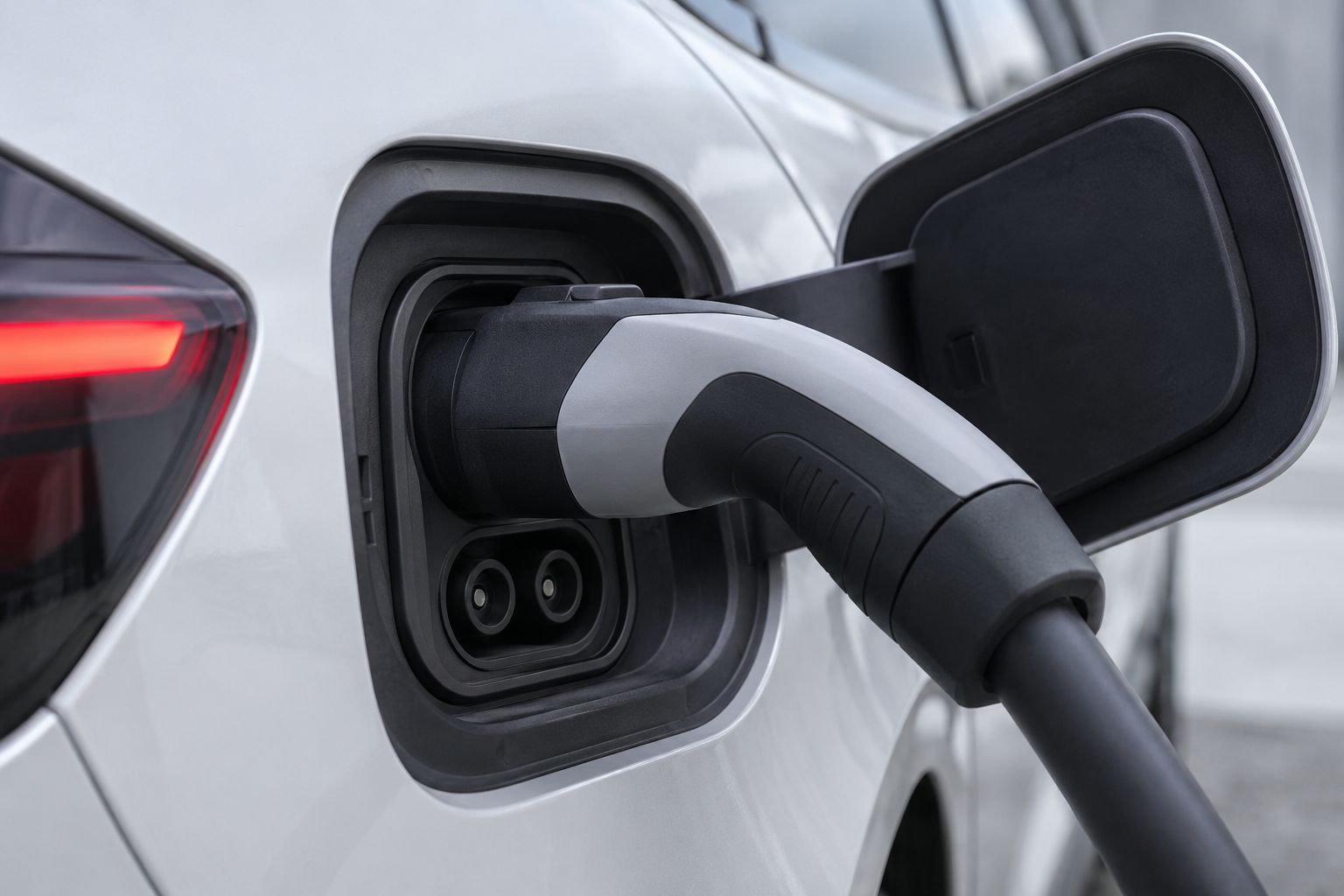
Close-up of a CCS rapid-charging connector plugged into a car's charging port.

Why power tapers

As the cells fill, the car's battery management lowers the current to keep cell voltage and temperature within safe limits. The charger may be able to offer more; the car simply chooses to take less. Towards the top, the taper becomes steep, so the last fifth of the battery can take a disproportionate share of the stop.

Cold matters too. A battery that hasn't been warmed up can charge well below its usual pace, which is why preconditioning before a rapid stop is worth doing. See the winter note.

Arrive low, but not too low

Arriving with somewhere around a tenth to a fifth of the battery left means the car spends its whole stop in the fast part of the curve. Keep a buffer, though: the charger you are heading for may be busy or out of order, and you will want room to reach the next one.

Leave a bigger margin in winter, at night, and on routes where chargers are thin on the ground.

When going past 80% makes sense

Fill up if the next reliable charger is beyond what 80% would get you, or before a stretch with few options. At home overnight, follow your handbook's guidance on everyday charge limits and charge fuller before long trips.

At a quiet hub with nobody waiting, a few extra minutes may simply suit you. At a busy one, unplug at 80% and let the next driver on.

ownership notes

The practical bits of ownership, one note at a time.

Six short notes on the questions owners ask most. Open any of them for the detail. Each ends with what to check for your own car, because menus, software and handbooks differ between models and model years.

at home

Getting a home wallbox fitted, and checking current grants

Most charging happens on your own drive, overnight. Getting the installation right matters more than the brand of box on the wall.

Start with a proper survey

A good installer looks at your consumer unit, your main fuse, your earthing arrangement and the cable route before quoting, ideally in person or from detailed photos. A typical home charger on a single-phase supply draws a large, sustained current, so they should check your maximum demand and fit load management if needed, so the charger throttles back when the oven, shower and heating are all on.

Ask how they will meet the regulations

  • The work should comply with BS 7671, the IET Wiring Regulations, and come with an electrical installation certificate.
  • Many UK homes have PME earthing. Ask how the installer is protecting against an open-PEN fault; many current chargers build this in.
  • The installer should notify your distribution network operator (DNO). If your supply needs upgrading, that can add weeks.
  • In England and Wales, the work is normally notified under building regulations through the installer's competent person scheme.

Smart charging and tariffs

New home chargepoints sold in Great Britain have had to be smart-capable since 2022, with default settings that avoid peak hours, which you can override. Pair the charger with an off-peak EV tariff and set the schedule in one place, either in the car or in the charger's app. If both try to control timing, charging can fail to start.

Grants

The government's chargepoint grant, administered by OZEV, has changed several times. At the time of writing it is aimed mainly at people who live in flats or who rent, rather than owner-occupiers with a driveway. Check the current eligibility on GOV.UK before you budget for it, and be wary of any quote that deducts a grant without confirming you qualify.

Check for your car: which side the charging port is on, how you park, and whether a tethered cable will reach comfortably. A three-pin "granny" cable is fine for occasional use, but plug it into a sound, dedicated socket and never into an extension lead.
on the road

Public networks and apps, without the faff

You no longer need a dozen apps, but a little preparation still saves time and money on a long trip.

Know the three kinds of charger

  • Destination AC posts in car parks, hotels and supermarkets: slow, but ideal while you are parked for hours anyway. Many are untethered, so carry your Type 2 cable.
  • Rapid and ultra-rapid DC chargers at hubs and motorway services: tethered CCS cables, and much faster, but your car's own charging curve decides how fast in practice.
  • On-street posts in lamp-posts or kerbside units: useful if you have no driveway, but check overnight availability and any parking restrictions.

Paying

Rules introduced in 2023 mean rapid chargers in Great Britain should take contactless payment and show prices in pence per kWh, and networks must offer a free 24/7 helpline. Apps and subscriptions can still lower the price per kWh, so compare before committing to one. Watch for idle or overstay fees and for car-park time limits at services.

Why public charging costs more

Public charging carries 20% VAT, whereas domestic electricity carries the reduced 5% rate, and rapid hubs carry heavy grid connection and hardware costs. The calculator above shows what that gap means for a typical top-up.

Plan with a backup

Before relying on a site, check recent status and user check-ins in a charging map app, and know where the next option is within comfortable range. Arrive with enough charge to reach it.

Check for your car: whether setting a rapid charger as the destination in the built-in navigation prepares the battery for charging, and which payment methods or charging cards your car's app supports.

cold weather

Winter range and preconditioning, honestly

Range falls in the cold. How much depends on temperature, journey length and speed, so measure your own rather than trusting a headline.

Why it happens

A cold battery has higher internal resistance and may limit regenerative braking until it warms. Heating the cabin takes energy, and cold air, wet roads and winter tyres all add drag. Short trips are hit hardest, because the car warms the cabin and battery from cold every time.

Measure in mi/kWh

Note your average miles per kWh on similar journeys in summer and in winter. Usable capacity multiplied by your mi/kWh gives a realistic range for that season. Put your winter figure into the calculator to see what a charge buys you in January.

Precondition while plugged in

  • Set a departure time in the car or the My BMW app so the cabin is warmed on grid power, not from the battery.
  • Use heated seats and, where fitted, a heated steering wheel: they warm you more efficiently than heating all the cabin air.
  • Before a rapid stop, let the car warm the battery. On many recent models this happens when a rapid charger is set as the destination in the built-in navigation; some also offer a manual option.

Leave more margin

Arrive at chargers with more in reserve than you would in summer, and expect the dashboard range estimate to be pessimistic for the first few miles of a cold morning until it adapts.

Check for your car: whether it has a heat pump, how battery preconditioning is triggered, and where the departure-time settings live in your software version.

driving

Regen, B mode and adaptive recuperation

Regenerative braking turns the motor into a generator. Choosing the right setting makes the car smoother and calmer to drive.

The settings

Most current electric BMWs let you choose how strongly the car recuperates when you lift off: an adaptive setting plus fixed levels, and a B position on the selector for the strongest setting, which slows the car almost to a stop for one-pedal-style driving. Names and options vary by model and software.

Adaptive, explained

The adaptive setting uses navigation data and the car's sensors to vary recuperation: coasting freely on an open road, then slowing more firmly as you approach a junction, a roundabout or a slower car ahead. Many owners find it the most relaxed choice on mixed roads.

Getting the most from it

  • Smooth anticipation saves more energy than any setting. Coasting is more efficient than slowing with regen and then accelerating again, because no conversion is lossless.
  • B mode suits town traffic; passengers prone to car sickness may prefer a gentler setting.
  • When the battery is full or very cold, regen can be reduced and the car blends in the friction brakes, so it may feel different for the first few miles.

Look after the brakes

Because the friction brakes are used less, discs can corrode. Brake firmly now and then where it is safe, and have the brakes checked at every service.

Check for your car: where the recuperation menu lives, whether your choice is remembered when you restart, and how B mode behaves at very low speeds.

running costs

Tyres and weight: the bill nobody mentions

Electric cars are heavier than their petrol equivalents and deliver torque instantly. Tyres feel both.

Choosing replacements

  • BMW-approved tyres carry a star (★) on the sidewall, meaning they were developed for that car. Some EV fitments also have noise-absorbing foam inside.
  • Match the load index exactly, including XL or the newer HL high-load markings, and the speed rating.
  • Look at the tyre label: rolling resistance affects efficiency, while wet grip and noise ratings matter for safety and comfort.

Pressures and alignment

Check pressures at least monthly, cold, using the placard on the door pillar for the load you carry. Under-inflation wastes energy and wears the shoulders. After a heavy pothole strike, look for uneven inner-edge wear and have the alignment checked.

Wheel size

Large wheels look good, but they usually ride more firmly, cost more to re-tyre and reduce efficiency. If you are choosing a new car, drive it on the wheels you would actually order.

Spare or no spare

Many electric cars have no spare wheel. Know whether yours has a repair kit, run-flat tyres or neither, and what your breakdown cover includes.

Check for your car: the exact tyre size, load and speed ratings on your current tyres, whether they carry the star marking, and the recommended pressures for full load.

buying used

Buying used: battery health, history and warranty

A used electric BMW can be excellent value. The battery is the part to understand before you hand over any money.

Ask for a battery health report

Ask for a state-of-health check on the high-voltage battery. A BMW retailer can carry out a battery check, and independent services can test through the diagnostic port. Ask what the figure means, how it was measured and when. The dashboard range estimate reflects the previous owner's driving, not the battery's health.

Charging history and records

  • Ask how the car was mostly charged, at home on AC or mainly on rapid chargers. Heavy rapid use is not automatically a problem, but it is worth knowing.
  • Check the service history and whether software updates and recall work have been done. You can check for outstanding recalls on GOV.UK.
  • For cars over three years old, read the MOT history online, and run a finance and write-off check.

The battery warranty

BMW's high-voltage battery warranty in the UK has typically run for eight years or 100,000 miles, whichever comes first, with conditions about remaining capacity. Confirm the exact terms, the start date and the cover left on the specific car with BMW UK or a retailer.

On the test drive

Check that both charging cables are present, that the charge-port flap and cable lock work, and, ideally, watch the car start a charge on AC and on a rapid charger. Look at the tyres for uneven wear.

Check for your car: which generation you are buying. An "iX3" advert could be the earlier model or the new-generation car, and they are very different.

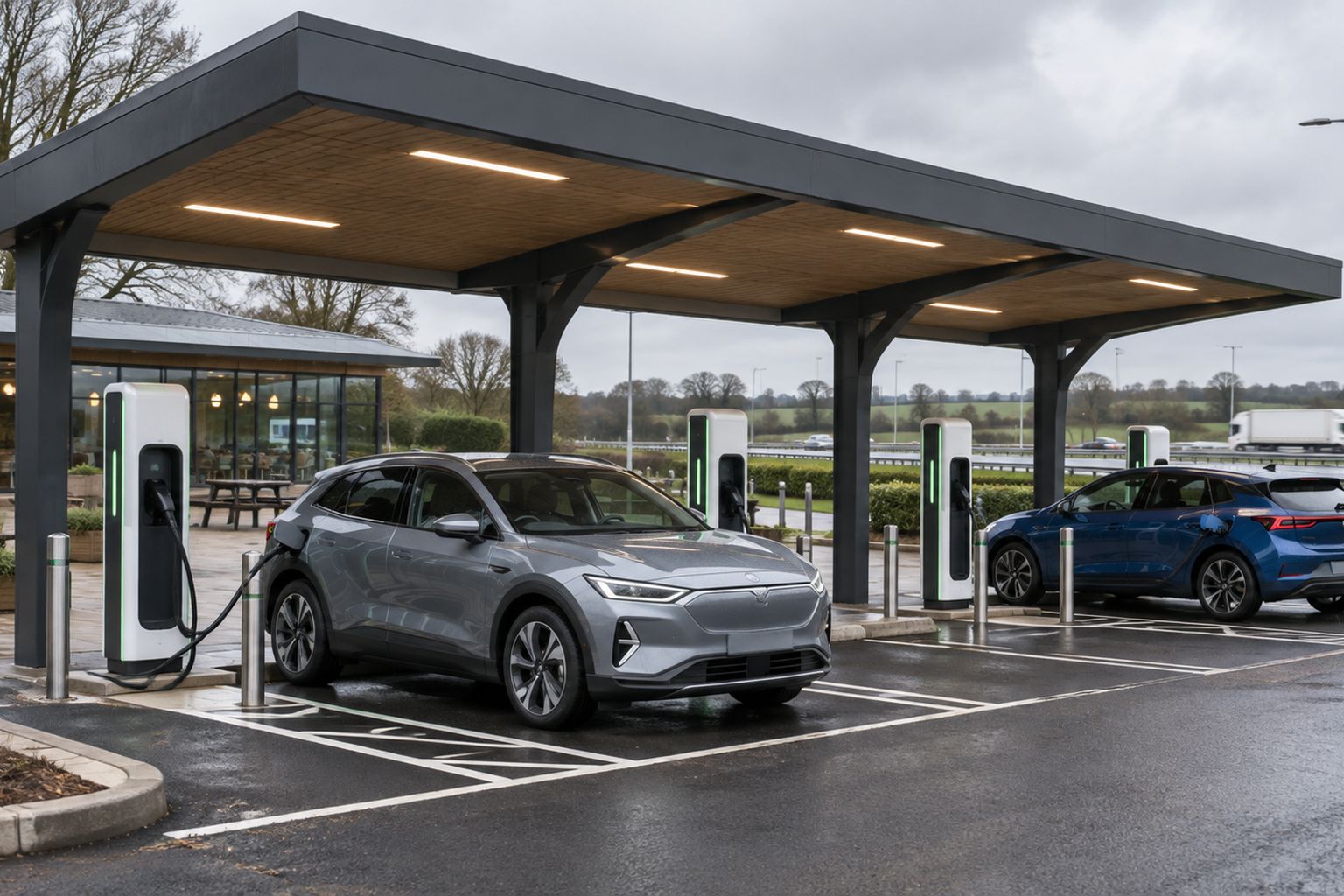
A motorway services rapid-charging hub under a canopy, with two cars plugged in.
A rapid hub is the motorway's equivalent of a fuel stop. Plan the stop around the curve, and arrive with a buffer.

will it fit your life?

Five questions before you commit.

Charging access matters more than which model you choose. Answer for the life you actually lead and you will get advice that fits it. Nothing you choose leaves this page.

Question 1 of 5Where would the car usually sleep?
Question 2 of 5How far do you drive on a typical day?
Question 3 of 5How often do you drive more than 200 miles in a day?
Question 4 of 5Could you charge at work or where you regularly park during the day?
Question 5 of 5Who and what do you usually carry?
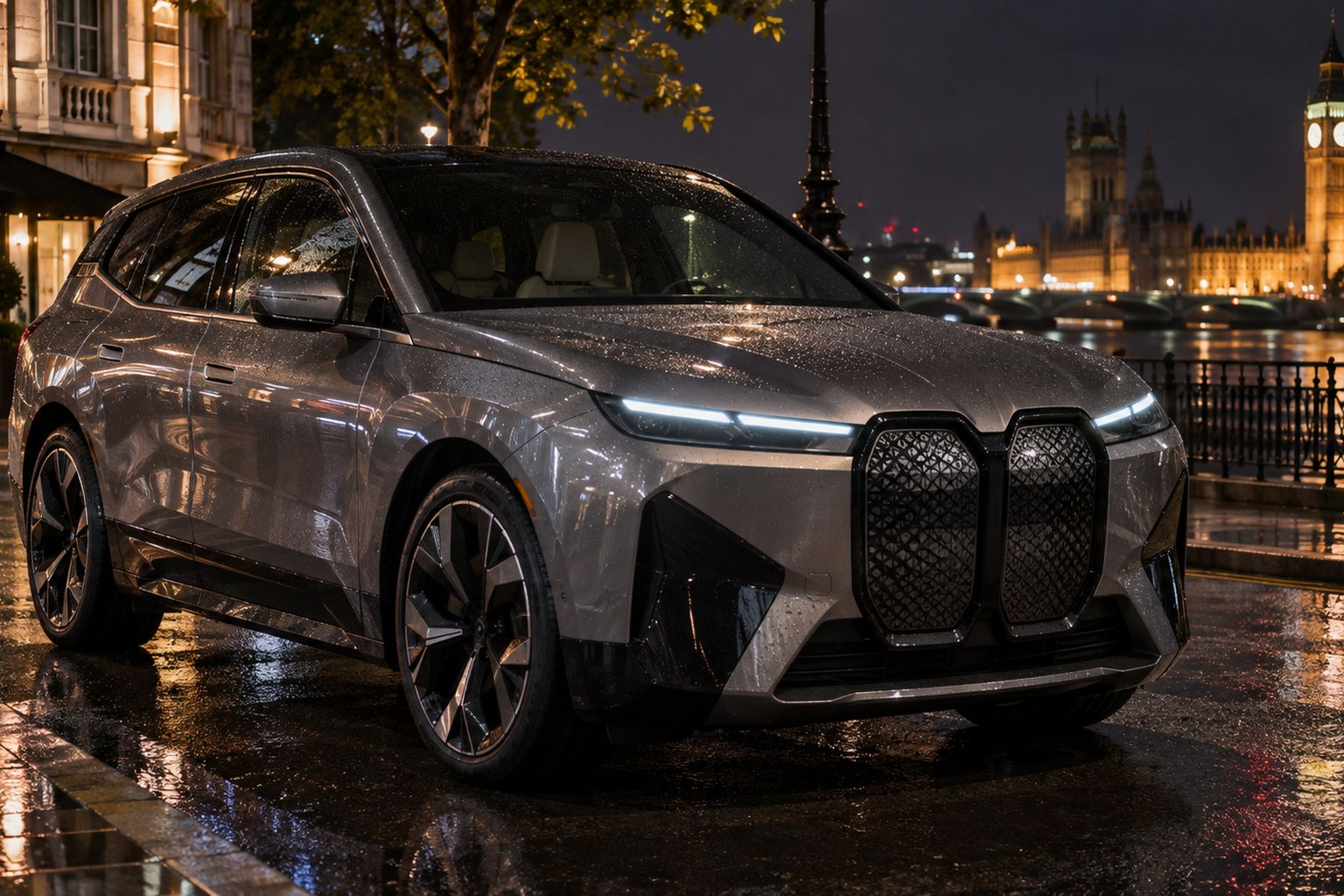
A large electric luxury SUV on a wet London street at night, its lights reflected in the road.

your result

Answer the five questions to see how an electric BMW would fit.

The result weighs where you can charge most heavily, then your mileage, long trips and what you carry, and points you to the relevant models in the line-up.

letters

Ask us something specific.

A wallbox quote that looks odd, a used car you are weighing up, a charging habit you are unsure about. We read every letter, answer what we can, and the most useful questions shape future notes.

Details help: the model year, how and where you charge, and what you have already tried.

This opens your own email app with your letter ready to send. Nothing is sent from this page and nothing is stored here. See our privacy policy.

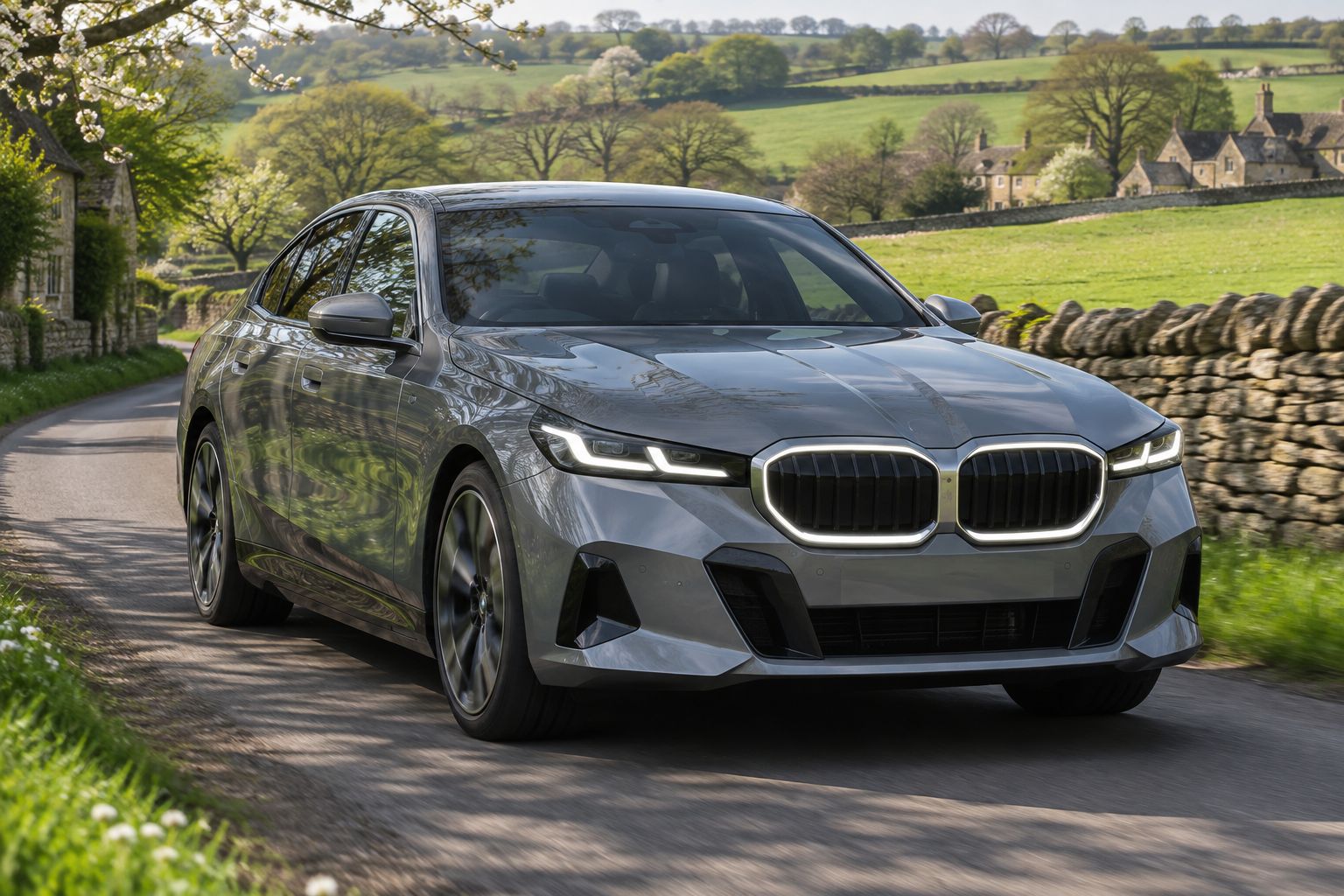
An electric saloon on a narrow Cotswolds country lane lined with dry-stone walls.

what happens next

  • We reply from [email protected], with a direct answer where we can or a pointer to the right person, often a qualified installer or a retailer.
  • We never publish a letter, or your name, without asking you first.
  • We can't diagnose faults or approve an installation; for those, you need a qualified professional who can see the car or the property.